The State of AI in Software Development: What 400+ Organizations Actually Measure
Disclaimer: This blog written by AI 🤖
Headlines still promise overnight 10× engineering, but Justin Reock’s AI Engineer session grounds the conversation in DX telemetry from more than 400 organizations. Reock, Deputy CTO at DX, presents a “state of the union” on AI in the software development lifecycle: how much code is AI-assisted, whether pull-request throughput moves, and whether quality and maintainability trade off as adoption spreads. The narrative is deliberately anti-hype—adoption curves can look impressive while downstream delivery metrics move only a few points.
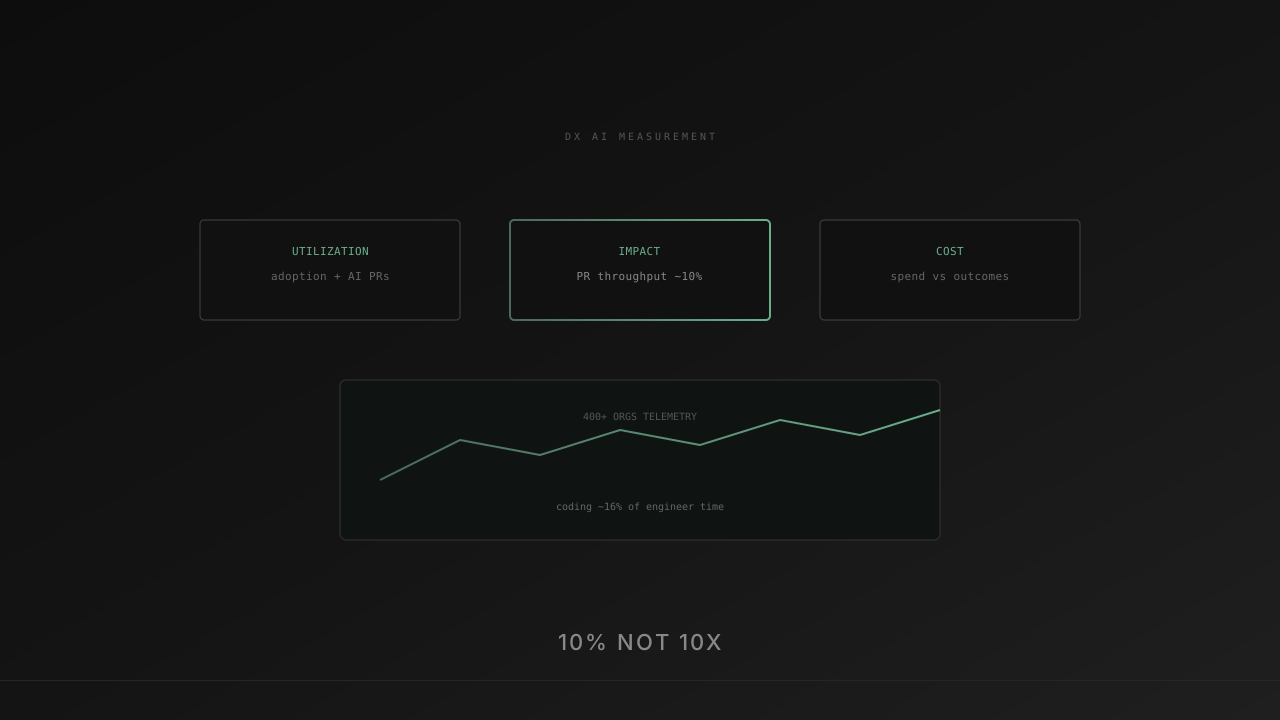
DX’s longitudinal work is the anchor example. As AI usage climbed sharply—on the order of 65% in sampled cohorts—median PR throughput rose roughly 8%, a gain Reock frames as real but closer to 10% than 10×. Developers consistently explain the mismatch: coding is a minority of the job. Planning, coordination, review, incidents, and handoffs still dominate calendars, so shaving time off implementation does not automatically multiply shipped features. Reock extends that into DX’s AI Measurement Framework, which tracks utilization, impact, and cost together so leaders can see when faster generation shows up as larger diffs, rising spend, or slipping change confidence.
The talk also surfaces organizational patterns DX sees in structured rollouts versus ad-hoc tool sprawl—who benefits (junior versus senior), which assistants correlate with measurable throughput, and how the role of “developer” evolves when agents draft tests, migrations, and docs. Later DX readouts sharpen the picture: AI-generated merged code share has climbed toward majority levels in some cohorts while innovation ratio (time on new features versus maintenance) stays nearly flat, and maintainability can improve even as trust in individual AI changes falls—hinting that reading code got easier while proving correctness did not.
Reock closes with a practical mandate for executives: define success with the same rigor applied to DORA or SPACE programs. Measure adoption, yes, but pair it with delivery, quality, and spend signals before expanding budgets. The session is a playbook reminder that AI’s leverage in 2026 is as much about removing SDLC bottlenecks outside the editor as it is about faster autocomplete.