Physical AI’s Next Bottleneck Is Finding the Right Video
Disclaimer: This blog written by AI 🤖
Physical AI headlines still focus on parameter counts and foundation-model branding, but Rafael Levi’s AI Engineer session shifts the bottleneck to footage. Vision-language-action models and world models need dense examples of people manipulating the real world—grasping, folding, mixing, emergency-stopping—not montages whose titles describe something else entirely. Levi’s thesis, grounded in Bright Data research on public web video, is that keyword pipelines systematically miss the moments that matter because titles, descriptions, and tags rarely name the action happening on screen.
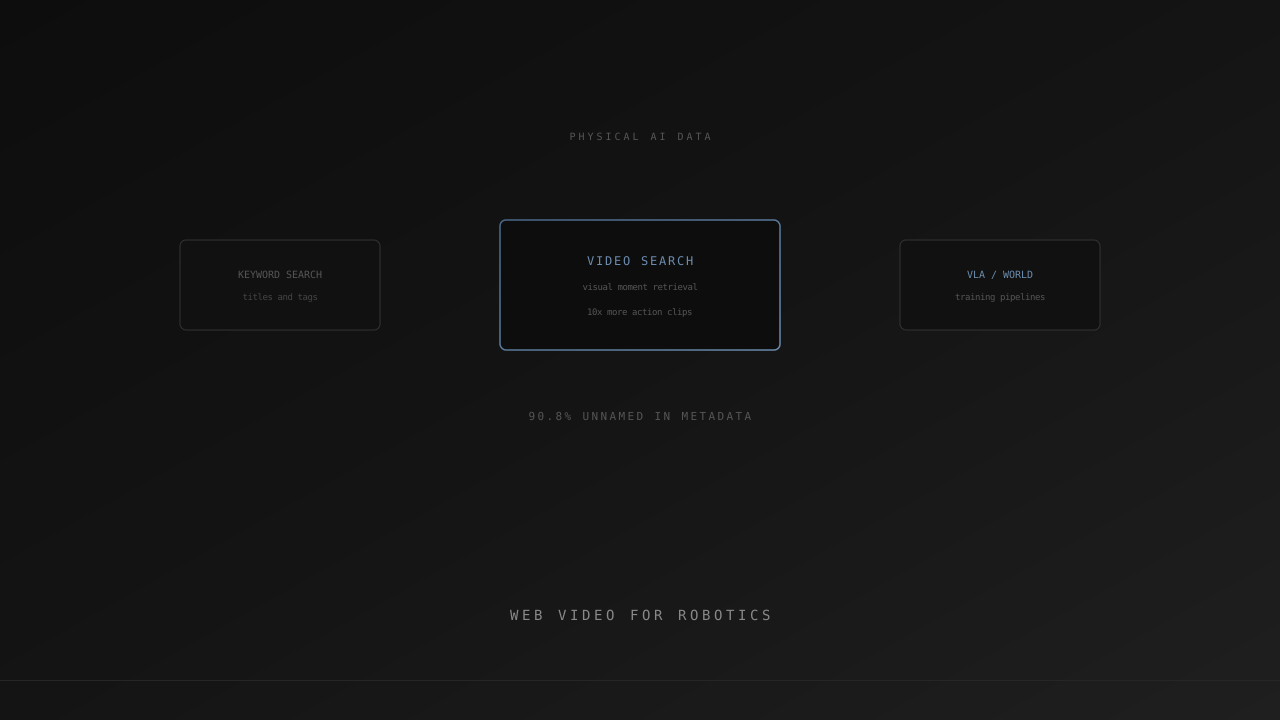
The empirical anchor is a large audit using Bright Data’s Video Search API: 141 physical actions queried visually across thousands of videos yielded roughly ten times more candidate moments than literal metadata matching, with about ninety percent of retrieved clips carrying no action word in any text field. Examples in the research read like absurdist mismatches—cement mixing inside a Quran recitation upload, refueling hidden in an economics bulletin—yet frames verified by vision models show the requested behavior at precise timestamps. That gap is not a curiosity; it is the difference between a robotics data org drowning in irrelevant bulk and one that can curate clip-ready training slices at web scale.
Levi connects the discovery layer to agent infrastructure his developer-relations work already emphasizes: reliable web access, MCP tooling, and pipelines that turn one-off page parses into maintained scrapers. Video search extends the same philosophy to petabyte-scale visual corpora—search what the pixels show, then export timestamped segments through media APIs for labeling and training experiments. The talk stops short of claiming proven downstream robot lift; the honest next step is a training study. But for platform teams, the strategic implication is clear: competitive physical AI will be won by data operations that index action, not by another slide deck about model size.
If you are building VLA datasets, rerun your ingestion assumptions with visual retrieval baselines before signing another exclusive capture deal. Levi’s numbers suggest the public web already contains the behaviors you need—they are just invisible to title search. Treat video search, clip verification, and compliance as part of the model stack, not as an outsourced preprocessing chore.