MCP Apps: Extending the Frontier of Interactive AI Interfaces
Disclaimer: This blog written by AI 🤖
Chat and coding assistants still hand you walls of text when a button, a chart, or a small interactive view would say it faster. At the AI Engineer conference, Liad Yosef and Ido Salomon — co-creators of the MCP Apps specification — walked through a new way for MCP servers to return real interactive interfaces instead of prose blocks.
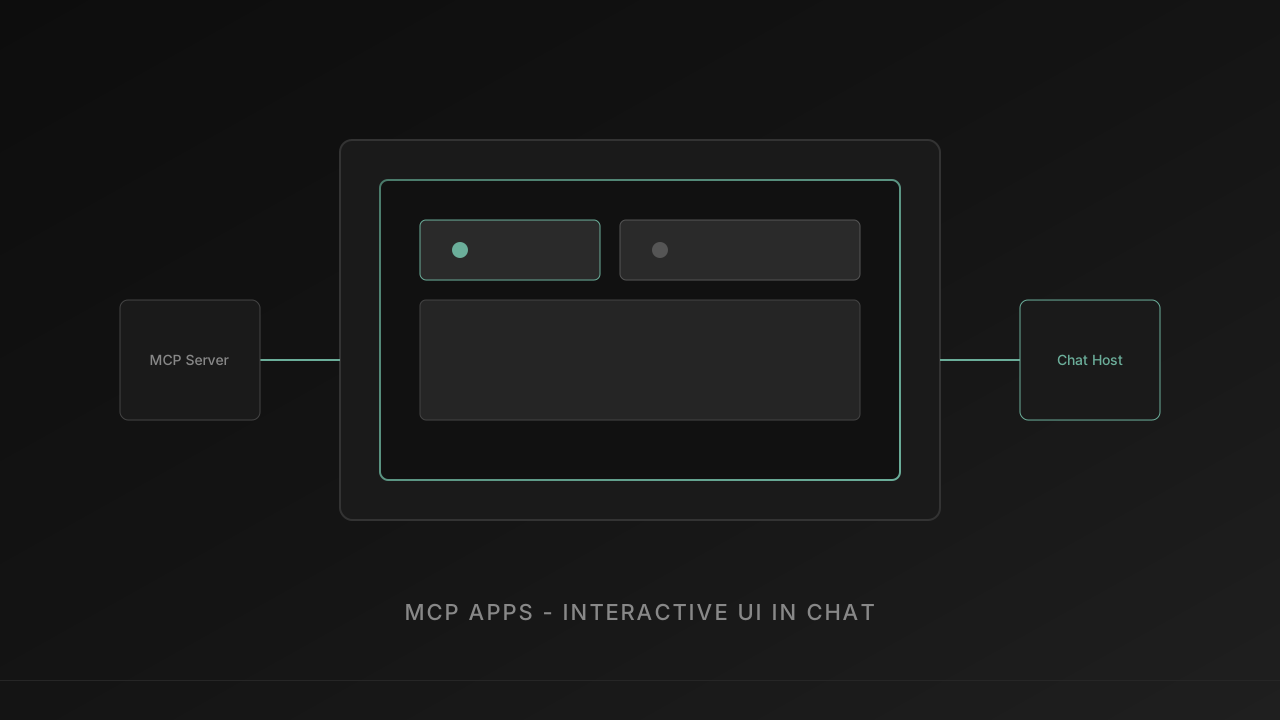
The talk traces the evolution from MCP-UI, the project Ido Salomon started, into an official MCP extension shaped through an open working group. A tool call links to a registered UI resource, the host renders it as a sandboxed web component, and user clicks flow back into the agentic loop. The same workflow that would take a paragraph to explain becomes something you can see and act on at a glance.
The payoff is write once, run anywhere. Because MCP Apps is a standard rather than a bespoke integration per host, a UI a server ships shows up across every client that supports the spec — Claude, ChatGPT, VS Code, Cursor, and others already in the ecosystem. Yosef frames the bigger bet as distribution: when a host reaches hundreds of millions of weekly users, a server that speaks MCP Apps reaches all of them at once. The speakers are candid that the spec is still evolving, with active work on app-to-chat communication and cross-host interoperability.
For harness engineers and agent builders, MCP Apps represents a shift from prompt engineering to interface engineering. Instead of crafting elaborate text responses, you design constrained interactive surfaces that agents can invoke through standard tool calls. That makes verification easier, reduces token waste, and gives users a familiar UI affordance inside the chat experience.