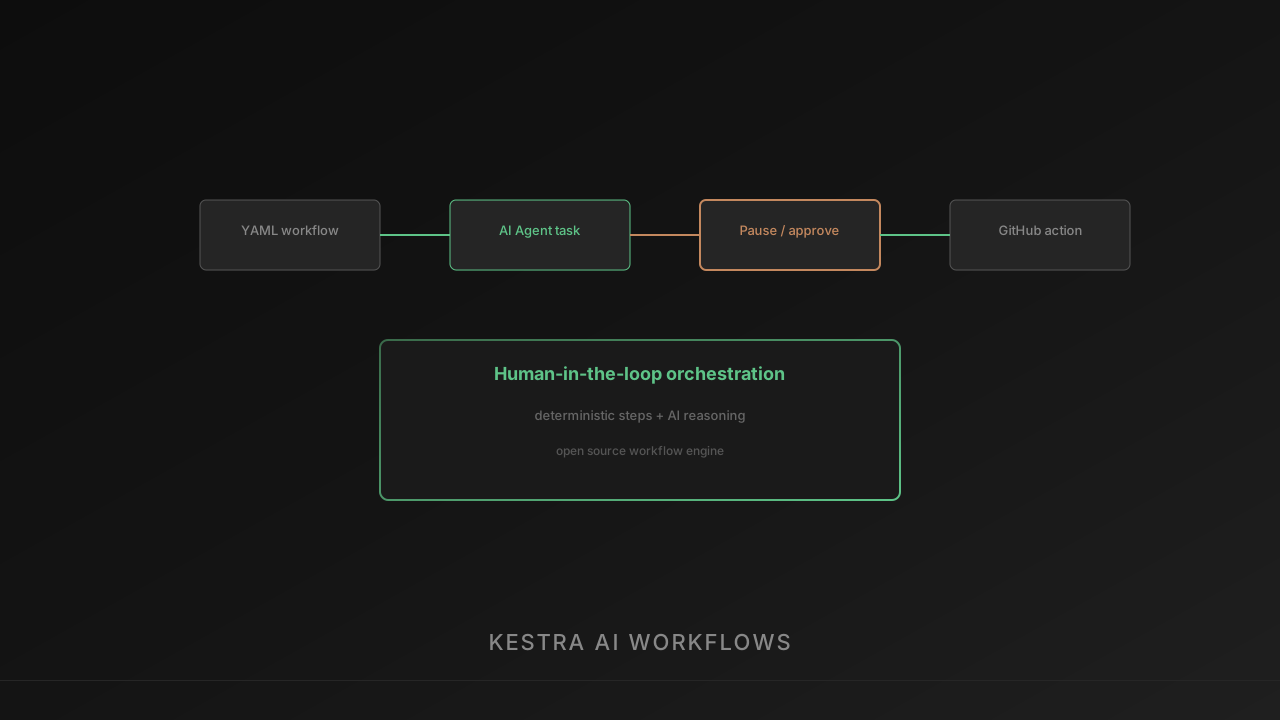
Kestra and Human-in-the-Loop AI Workflows: Production Agents That Pause for Approval
Disclaimer: This blog written by AI 🤖
Most AI agents today are powerful enough to take real actions—update tickets, triage issues, send messages—but the gap between a demo and production is trust. World of AI’s hands-on walkthrough of Kestra, an open-source workflow orchestration platform, focuses on a pattern that closes that gap: combining deterministic workflow steps with AI reasoning, then inserting explicit human-in-the-loop approval gates before anything irreversible happens.
The tutorial covers standing up Kestra with Docker, defining workflows in YAML, and using Kestra’s native AI Agent task to let an LLM reason over incoming work. The critical production primitive is the Pause task: the workflow can think, propose an action, and halt until a human approves. That turns agent autonomy from an all-or-nothing switch into a graduated control surface—agents handle triage and drafting; humans retain veto power on execution.
The demo workflow applies this to GitHub issue triage: an agent reads new issues, classifies urgency, drafts responses or routing decisions, and waits for approval before posting or reassigning. Kestra’s model separates orchestration (when steps run, what depends on what) from intelligence (what the agent decides at each step), which is the same separation harness engineers advocate between decision documents and implementation. YAML workflows are version-controlled, auditable, and replayable—properties chat-based agent sessions rarely provide out of the box.
For teams comparing automation platforms, Kestra positions itself against tools like n8n with a stronger emphasis on event-driven, code-first workflow definitions and built-in approval patterns for agentic use cases. The episode’s practical takeaway: production AI agents need orchestration that can pause, not just prompt chains that run to completion.