Evolution of Agentic Surfaces: When Harness Assumptions Go Stale
Disclaimer: This blog written by AI 🤖
Anthropic’s Applied AI team builds the production systems that turn Claude from a chat model into an agent that can own outcomes. In this AI Engineer session, Gagan Bhat and Isabella Kai He walk through how those systems evolved—from simple Messages API loops to the Claude Agent SDK—and why the hardest problem is not wiring tools but keeping the harness aligned with what the model can actually do today.
Their opening example is “context anxiety.” Sonnet 4.5 would approach its context window limit and wrap up early, stopping with room to spare. The team built context resets into the harness to compensate. Then Opus 4.5 shipped without that behavior, and the fix became pure overhead—adding latency and discarding cache that should have stayed warm. The principle they extract is blunt: a harness encodes assumptions about model limitations, and those assumptions go stale as models improve.
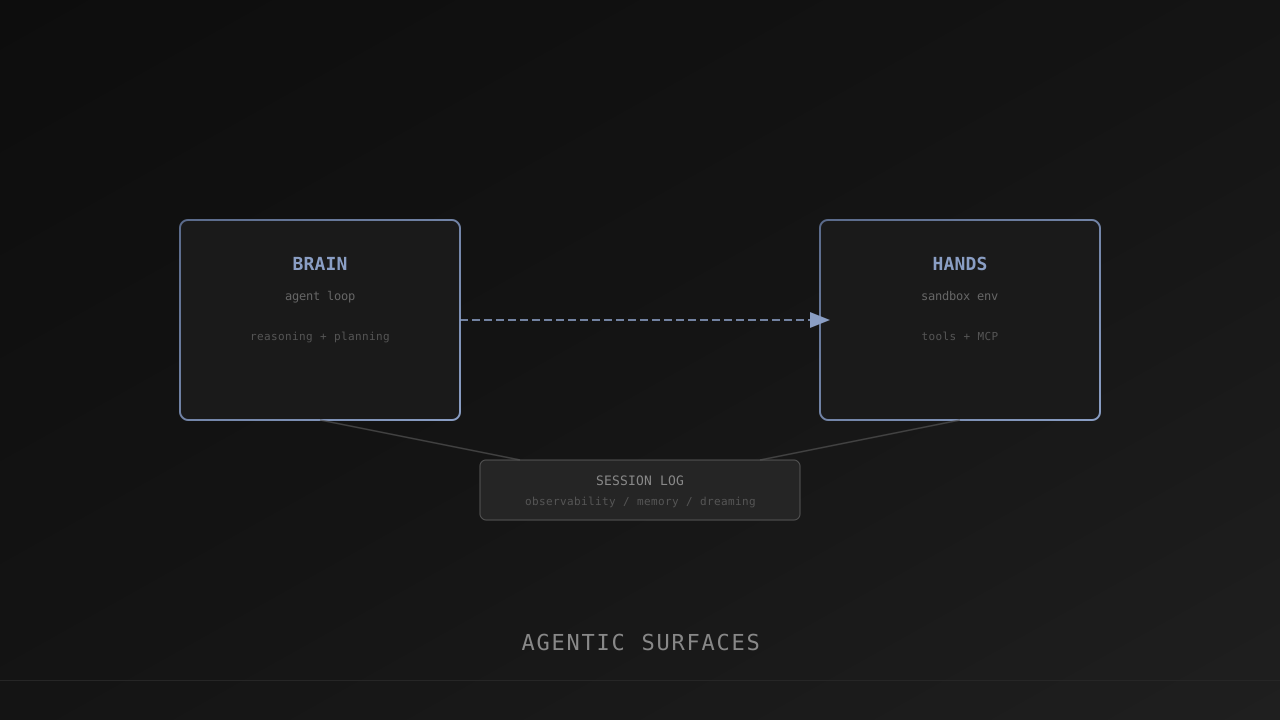
The architectural response is decoupling the brain (the agent reasoning loop) from the hands (the tool execution environment). When both lived in one container, the model could not start reasoning until setup finished, and either half failing took the whole agent down. Splitting them lets reasoning begin while the sandbox builds in parallel—measured at 60% faster time-to-first-token at P50 and over 90% at P95. Failure becomes recoverable: a dead sandbox is retried, and a dead brain resumes from a durable session log. That log does triple duty—observability, recovering context Claude discarded mid-run, and feeding a periodic batch process called “dreaming” that rewrites the agent’s memory so the next day’s sessions start smarter. The demo closes with an SRE agent diagnosing a latency spike, reinforcing four lessons: keep credentials away from the agent, measure where latency actually lives, treat session logs as memory, and use self-hosted sandboxes with MCP tunnels for production control.