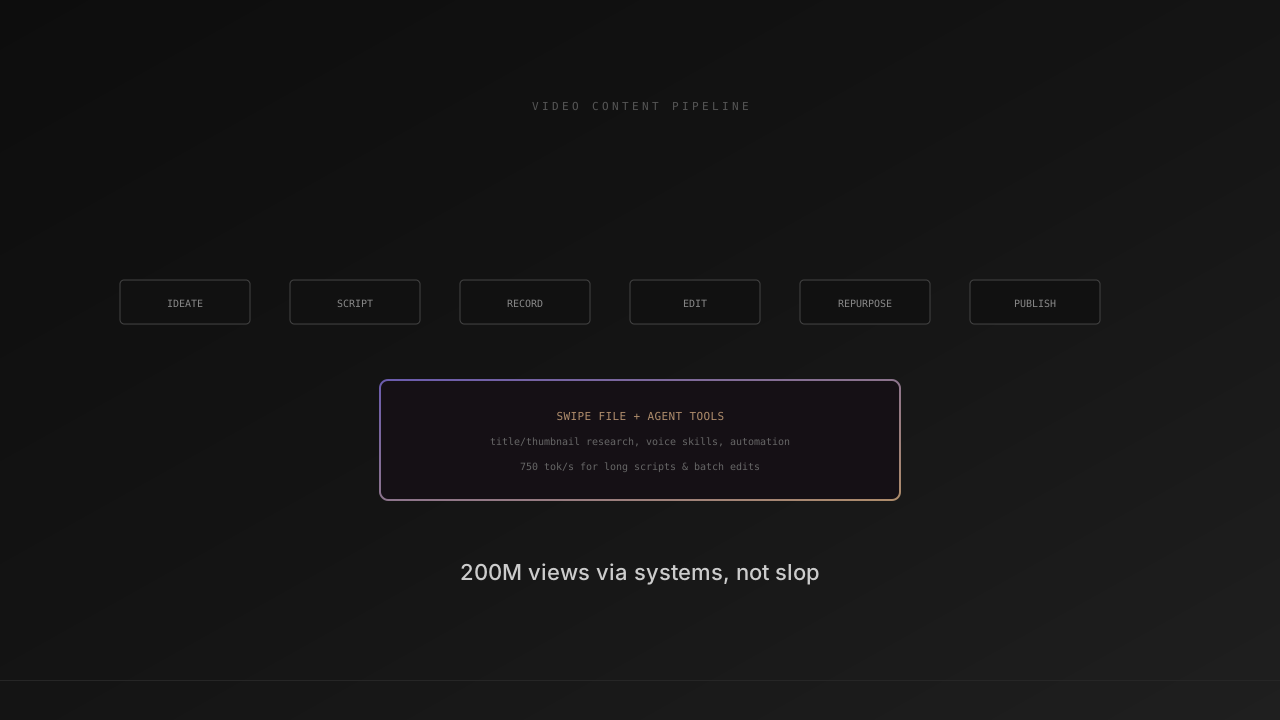
The AI Content System Behind 200M Views: Cerebras × OpenAI Workshop
Disclaimer: This blog written by AI 🤖
Sarah Chieng (head of developer experience at Cerebras) and Cova Lee (OpenAI developer experience, formerly a full-time short-form creator) opened their AI Engineer workshop with a blunt statistic: audiences retain roughly 10% of spoken information after three days, but visual storytelling pushes retention toward 65%. Their goal was not “press record and pray,” but a repeatable system that separates craft from tedium. They run the stack on ChatGPT/Codex with GPT 5.6 Sol Ultra Fast—highlighting ~750 tokens per second on Cerebras hardware for chewing through long scripts, shot lists, and batch caption passes—and published a written companion blog so prompts and tool lists are copy-pasteable without retyping slides.
Their framework has six explicit stages: ideating, scripting, recording, editing, repurposing, and publishing. Ideation starts with a swipe file (Notion links, Obsidian boards, or curated sites) so agents inherit taste from references, not vague adjectives; Chieng stresses spending roughly half of packaging effort on titles and thumbnails because packaging drives the first click. Cova demoed custom research agents—YouTube title/thumbnail miners plus a homepage simulator to see whether a concept stands out before filming. Scripting favors voice-first capture (Whisper Flow, Codex voice interviews) to avoid marketing tone, then script skills trained on prior work with multiple ranked variants scored for engagement versus cut length. Recording adds annotated shot lists (A-roll, B-roll, screen capture) and tools like Coast for retroactive demo discovery and CleanShot for annotated captures without opening a full NLE.
Editing and repurposing lean on agent-controlled APIs (HyperFrames/HeyGen for one-shot social cuts and micro avatar fixes), CapCut/Premiere/Final Cut with MCP or computer-use automation, custom sound pads, generative background upgrades, and Blender/After Effects floating-object workflows driven by swipe references. Publishing flows through Buffer (or similar) with platform-specific caption skills, Wikipedia’s “signs of AI writing” pasted as a guardrail, and proactive assistants (Dots) to monitor outliers and schedule cutdowns. Both creators insist agents automate repetitive labor—captions, B-roll assembly, scheduling—while humans stay in the driver’s seat on POV, taste, and big ideas; the meta-skill they recommend is weekly process reviews that turn bottlenecks into new tools or updated Premiere sub-skills.