Giving AI Agents Memory That Learns
Disclaimer: This blog written by AI 🤖
Most teams can tell you exactly what their agent did last Tuesday. Far fewer can show that Tuesday’s run made Wednesday’s agent measurably better. Jake Broekhuizen from LangChain Labs opens his AI Engineer session with that gap: observability produces evidence, but evidence is not memory until a durable lesson lands in context the agent reads on the next invocation. He illustrates the point with a financial-services agent whose tone kept drifting from advisory to pushy—logs showed the slip, yet the product kept repeating it until memory was designed, not merely recorded.
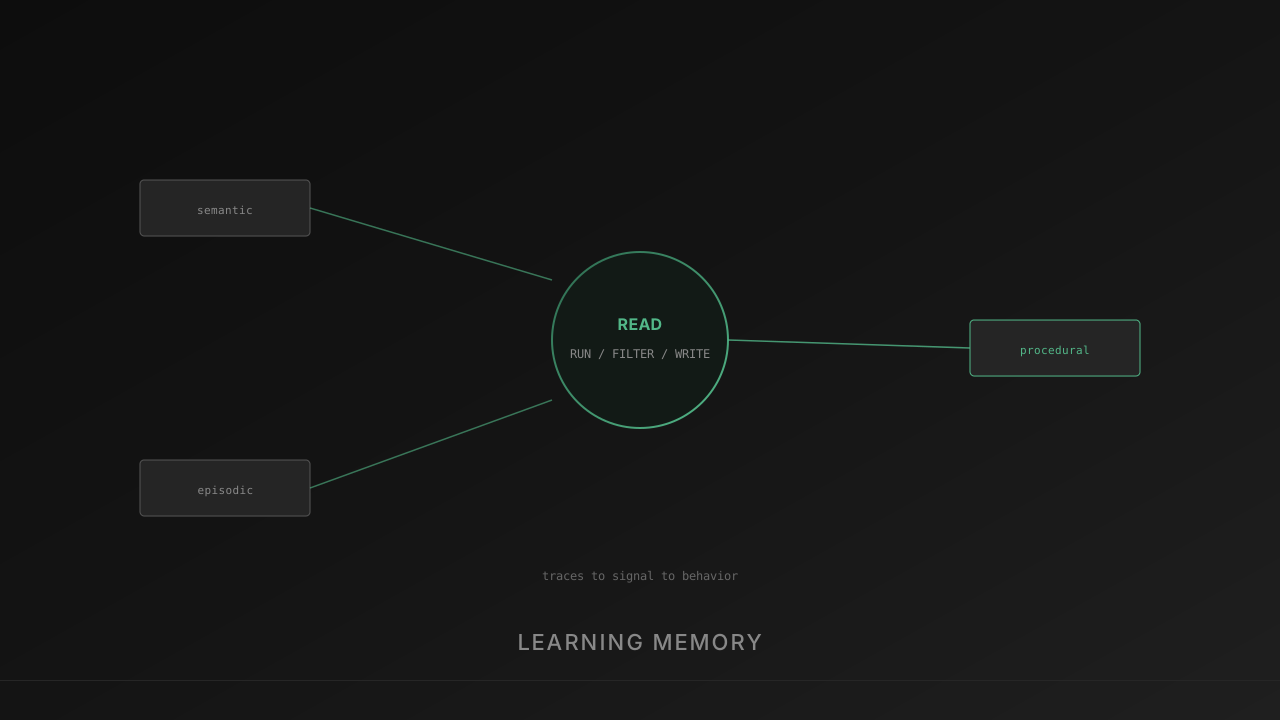
Broekhuizen breaks memory into semantic, episodic, and procedural layers, and argues procedural memory is what actually moves behavior (rules, playbooks, and “how we do things here”). Working memory holds the hot path; long-term memory holds what should survive across sessions. The operational loop is read context, run the agent, filter traces for signal rather than hoarding every span, then write back only what should change the next run. LangSmith plus Context Hub is his reference stack for capture, analysis, and updates—showing the finance agent fixed once procedural rules were promoted from noisy history into reviewed context.
Three lessons close the talk for practitioners building harnesses. First, most traces should remain history, not memory—storage is cheap, but prompt pollution is expensive. Second, watch caching on the hot path; stale procedural rules can be worse than no memory. Third, put human review on procedural changes that encode compliance or brand voice. For teams scaling agent fleets, the message is that learning is an engineering workflow, not a side effect of better models.